
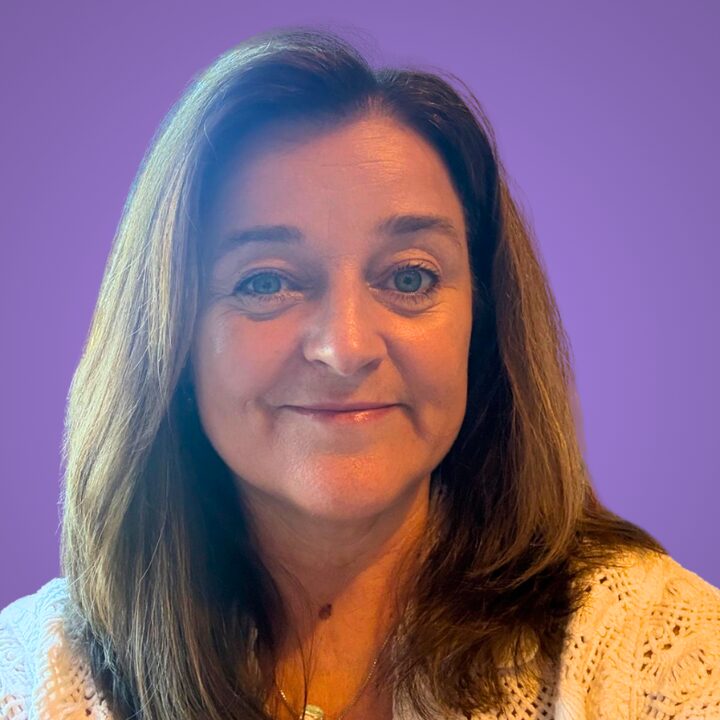
Alison Triste
BSc (Hons) Psychology, PG Dip Cognitive Behavioural Psychotherapy, BABCP-accredited
Co-founder and Clinical Content Lead. CBT psychotherapist, and supervisor to trainees on several university CBT courses.
For postgraduate CBT courses
Flutura is inviting a small group of universities to become Academic Partners, to evidence how digitally enabled CBT tools support trainee development and the transition from academic study into professional practice.
Flutura is a clinical platform for CBT therapists: protocol-led session structure, session notes, outcome measures and client homework in one account.
A trainee runs a named protocol from the first session to the last, adapting it to the client in front of them without losing the structure it was based on: flexibility with fidelity.
Every protocol sits under its model, so a course team can map the library against a syllabus on sight: Beck for depression, Clark and Wells for social anxiety, Ehlers and Clark for PTSD, Wells for generalised anxiety, Salkovskis for OCD, Foa for exposure work.
Not every model a course teaches is in the library today. It is expanding, and what a partner's course needs is what gets built.
Every note follows the same CBT structure: agenda, week review, homework review, activities, risk flags, homework given, next steps. The note is drafted from the session recording by AI, and any section that cannot be grounded in what was said stays empty. Risk flags are extracted against a defined clinical taxonomy, not improvised. The trainee reviews and signs every note before it is saved, and the recording is retained so the note can be checked against the session.
PHQ-9 and GAD-7 are charted over time. Other measures in the library, including SPIN and the Penn State Worry Questionnaire, can be assigned and scored but are not yet charted. Charting every assigned measure is on the roadmap.
A response indicating risk prompts a risk assessment. Risk assessments and safety plans are completed in the platform and held in the client's record, and can be shared with the client's GP where that is required.
Exercises are assigned from the protocol and completed by the client between sessions, on their own device. The trainee sees what was completed before the next session begins.
Flutura's clinical content supports the treatment of common mental health disorders. It uses evidence-based cognitive and behavioural models for each disorder. The library is expanding into more complex and specialist areas.
In line with
Alison Triste
BABCP-accredited CBT psychotherapist, and supervisor to trainees on university CBT courses. Co-founder and Clinical Content Lead, Flutura.
Flutura does not reproduce a course's own teaching materials and does not ask for them. What a partner contributes is guidance on what the library ought to carry, in line with the most recent validations and accreditations.
About the partnership
Partners receive full access for their trainees and their staff, and are invited to guide what the clinical library carries. The guidance is at the course team's discretion, and the access does not depend on it.
Participating trainees receive full Flutura licences, with no feature restrictions. Onboarding and training come with them, for staff as well as trainees, at no charge.
Every partner has a named implementation contact, an agreed review point, and input into what gets built next. Where the institution approves it, the course is recognised as a Founding Academic Partner, and Flutura will co-author a case study with the course team if the institution wants one.
A partner is invited to give guidance on what the library ought to carry, at whatever depth the course team chooses.
There is no co-development commitment, no obligation to share teaching materials, and no transfer of intellectual property.
Sessions are recorded as audio, on any device, with the video call running on the institution's existing platform as normal. Nothing changes for the client and nothing is installed by them. Flutura does not replace video recording for supervision or assessment, and does not claim to.
Onboarding for staff and trainees is run by the clinical leads and the development team, in person or by video.
Supervisor and cohort-level views do not exist yet. They are the clearest thing a partner shapes: what a supervisor needs to see, and what a course needs to report on, are better decided with partners than for them.
Flutura is in use today by practising therapists in UK private practice, and the partner programme exists so that the academic institutions teaching CBT shape what it becomes.
All Flutura infrastructure is hosted in the UK, in Amazon Web Services' London region. Two providers outside the UK see session content while it is transcribed and a note is drafted: a SOC 2 certified transcription provider operating under a strict no-training policy, and an analysis provider operating under a data-processing agreement. UK GDPR international transfer rules apply.
Session recordings are accessible only to the therapist who created them, stored encrypted, with access limited to that therapist's authenticated account. Flutura staff do not access session audio, and client data is not used to train any AI model, Flutura's or anyone else's.
Flutura is registered with the Information Commissioner's Office, reference ZB870821. A Data Processing Agreement is available, and data-subject requests are handled as standard, including the right to erasure under UK GDPR Article 17.
Where trainees are on placement, consent and information governance sit with the placement provider. Flutura takes part in that conversation.
Before any pilot begins, Flutura provides a governance pack and a conversation with the institution's IT and data protection people.
The Trust page carries the full detail, including what happens to a therapist's records if they leave.
Flutura was co-founded by two BABCP-accredited practitioners, and every feature is built to the clinical standard they set.
BSc (Hons) Psychology, PG Dip Cognitive Behavioural Psychotherapy, BABCP-accredited
Co-founder and Clinical Content Lead. CBT psychotherapist, and supervisor to trainees on several university CBT courses.
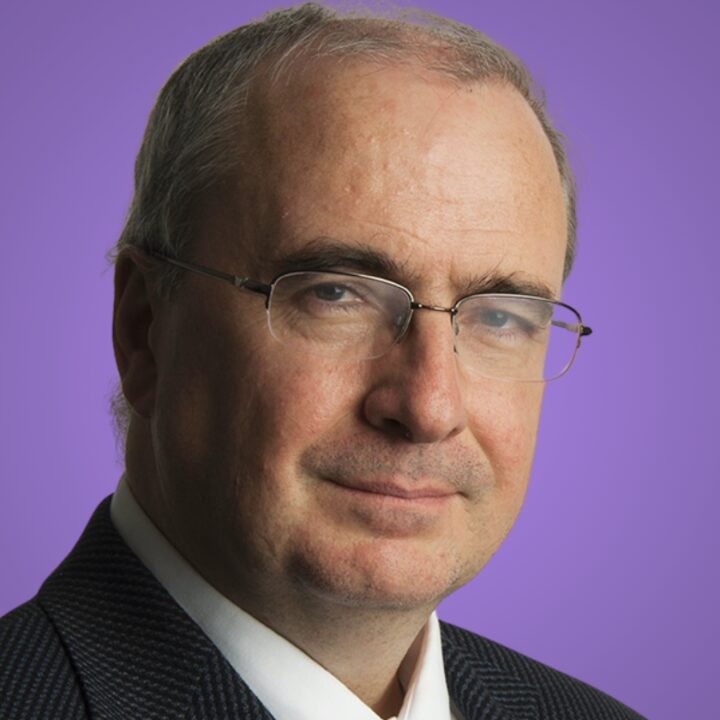
MA (Glasgow), D Phil (Oxford), PG Dip (UGM), C Psychol, AFBPsS, FHEA, NTF, FRSA
Co-founder and Clinical Strategy Lead. BABCP-accredited CBT therapist. Assistant Vice Chancellor at the University of Greater Manchester.
Tell us about your course and what you would like to know about the Academic Partner Programme.