Our story
Flutura started with a behavioural experiment on a folded sheet of paper
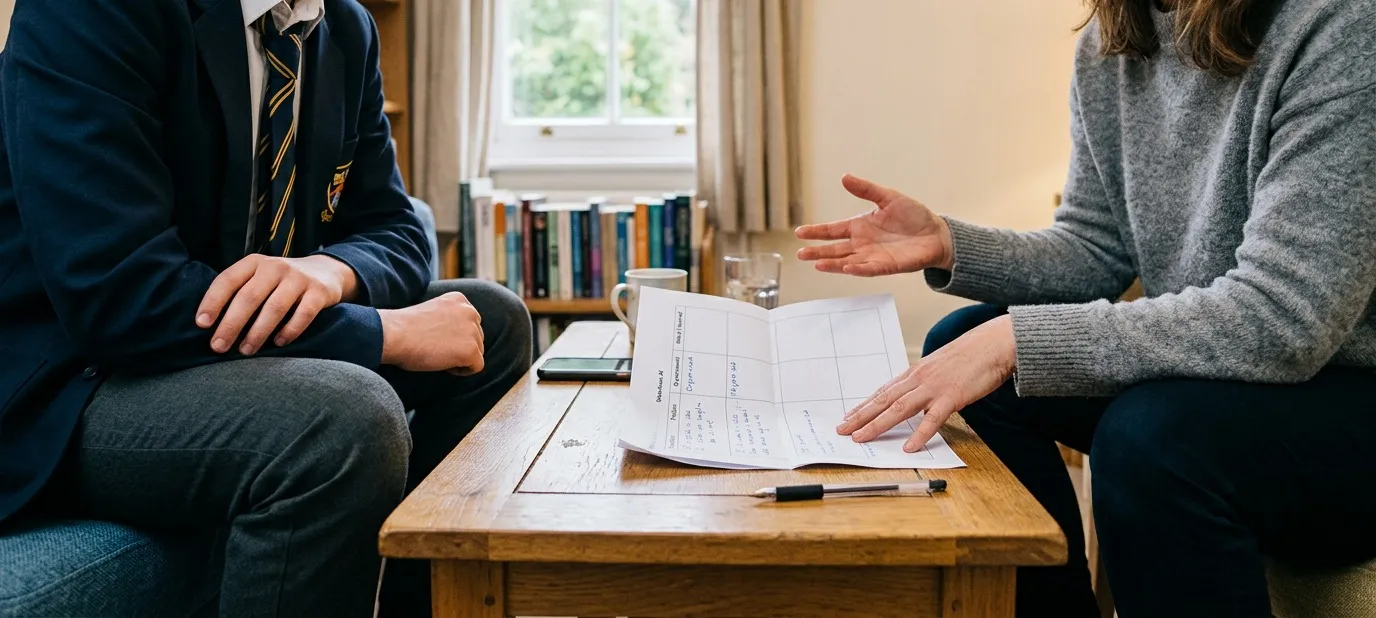
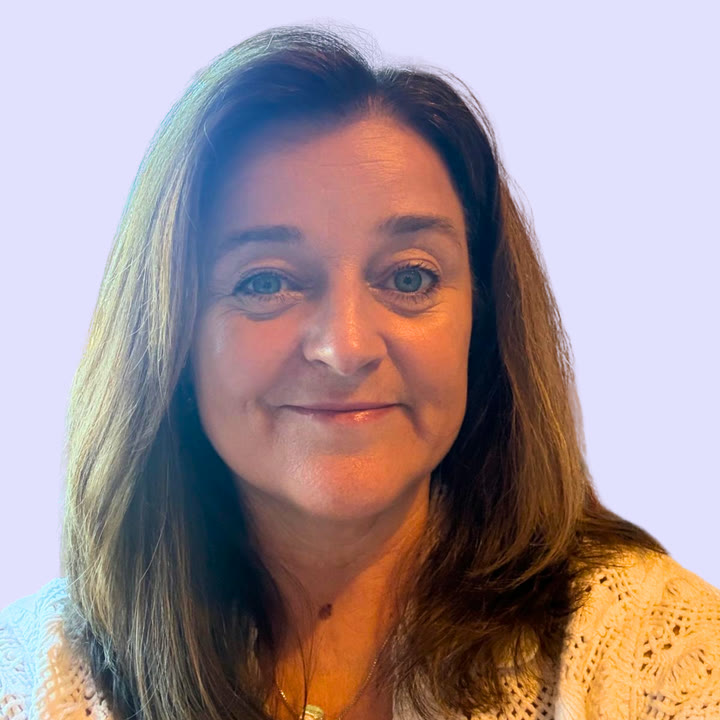
Alison Triste is a BABCP-accredited CBT psychotherapist and supervisor who wrote CBT for Young People. She was seeing a teenage client running a behavioural experiment before every lesson: predicting he would not cope, then writing down what actually happened. The experiment was working. He was carrying it between classrooms.
Then he showed her his phone. His school had already put everything it needed him to do in there: the work he had been set, and every message about it.
The school had it on his phone. The therapy was on paper.
Homework on a phone gets done in the moment. A thought written down as it happens is the one you can work with next week.
That was the idea. She took it to her husband. Tino Triste writes software, and he built Flutura and still maintains it.
Therapists asked us to build the session notes
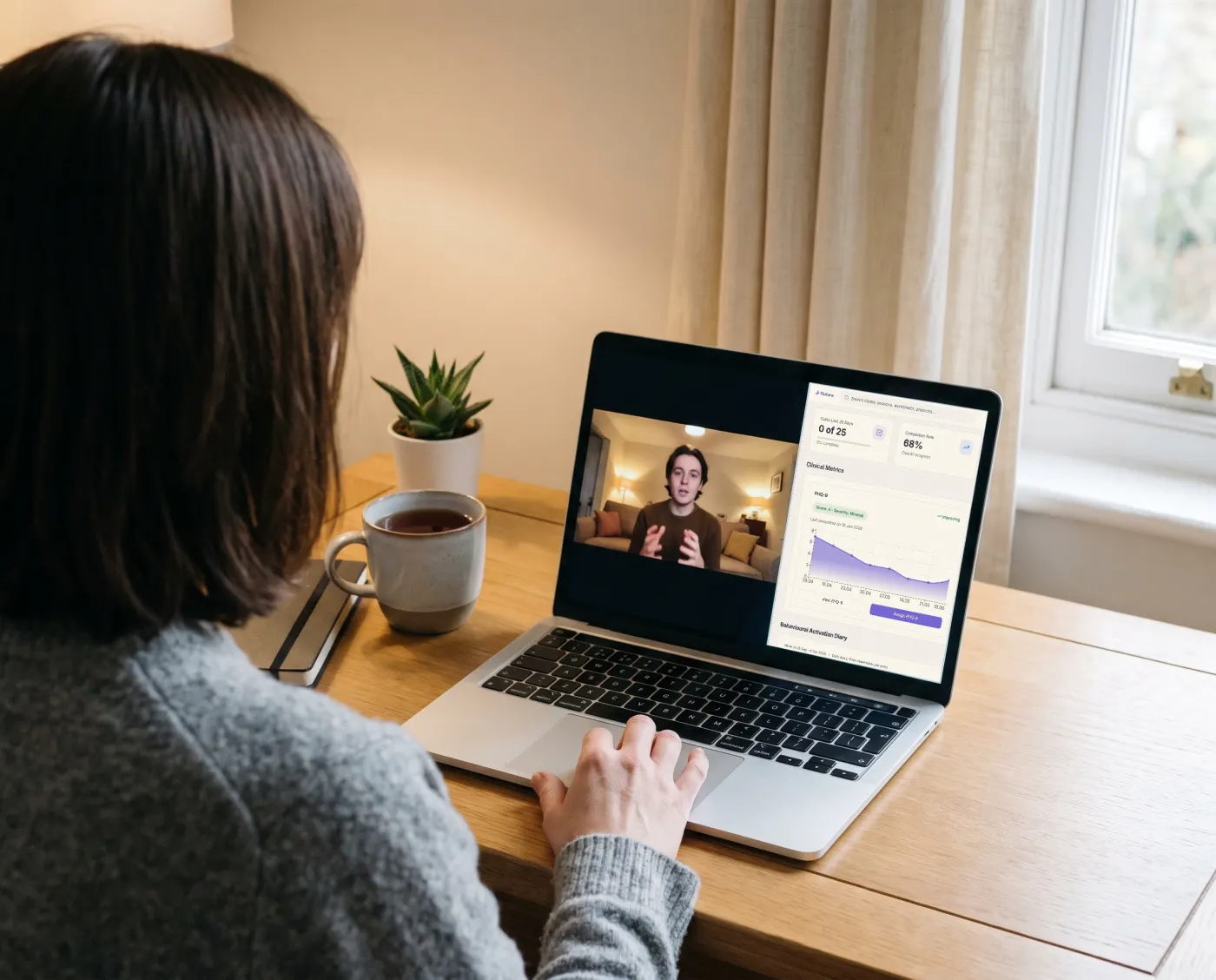
Alison likes to be present with the client in the room. Online she has the worksheets open and they fill them in together. Face to face she prints one off and they work on it on paper.
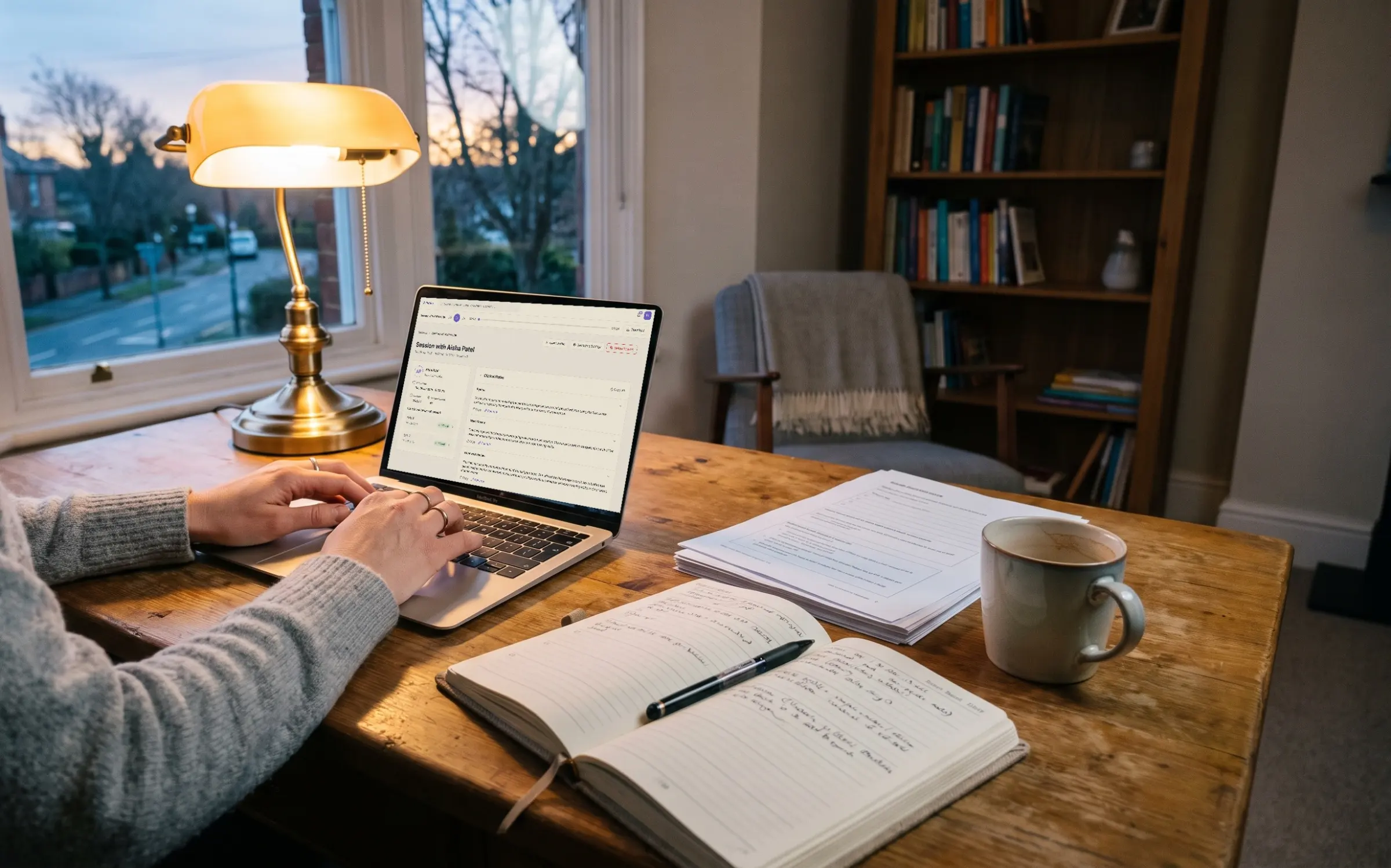
The session notes came from the therapists already using Flutura. Plenty of tools will record a session and give back a summary. What they wanted was a note in the shape they already work in: an agenda, the session itself, and the homework the client leaves with. The therapist reviews and signs every one before it is saved.
Every protocol in the library names the model it is based on
Professor Patrick McGhee is a co-founder. He is a Chartered Psychologist and a BABCP-accredited CBT therapist, 30 years across clinical practice, research and higher education, and he still sees clients. He is Assistant Vice Chancellor at the University of Greater Manchester, and he teaches every session in Flutura's free webinar programme, which is open to any CBT therapist.
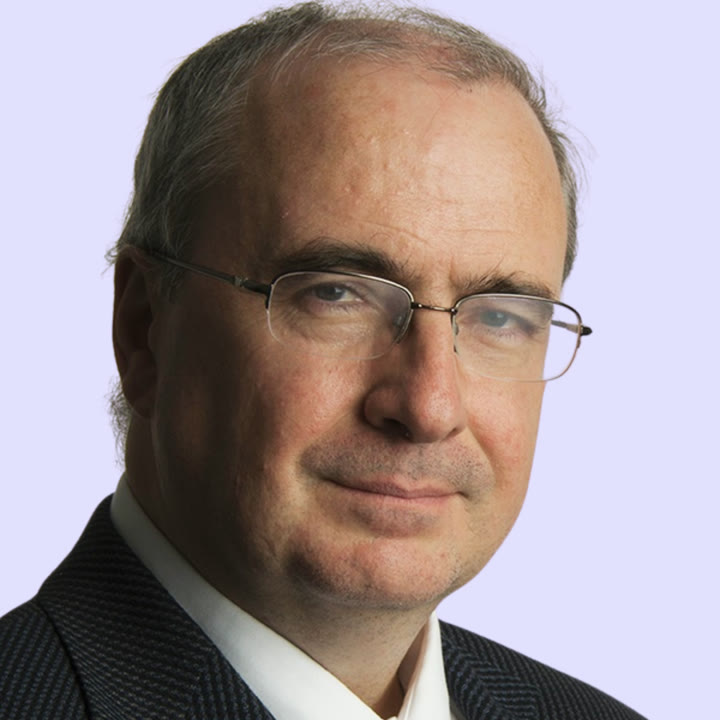
He and Alison decide what goes into the clinical library. Beck for depression, Clark and Wells for social anxiety, Wells for generalised anxiety, Ehlers and Clark for PTSD, Salkovskis for OCD, Foa for exposure work, in line with NICE guidelines and the Roth and Pilling framework.
Our clinical founders use Flutura with their own clients
Alison and Patrick both still see clients, and their own caseloads are on Flutura, session by session.
The library keeps growing. The core protocols for the common mental health disorders are already in, and so is DBT. More third-wave material is being rolled out. Private practice runs on flexibility within fidelity, and one size does not fit all.
Flutura is made for the therapy room we still work in.
Alison Triste · Prof Patrick McGhee
See how Flutura works